
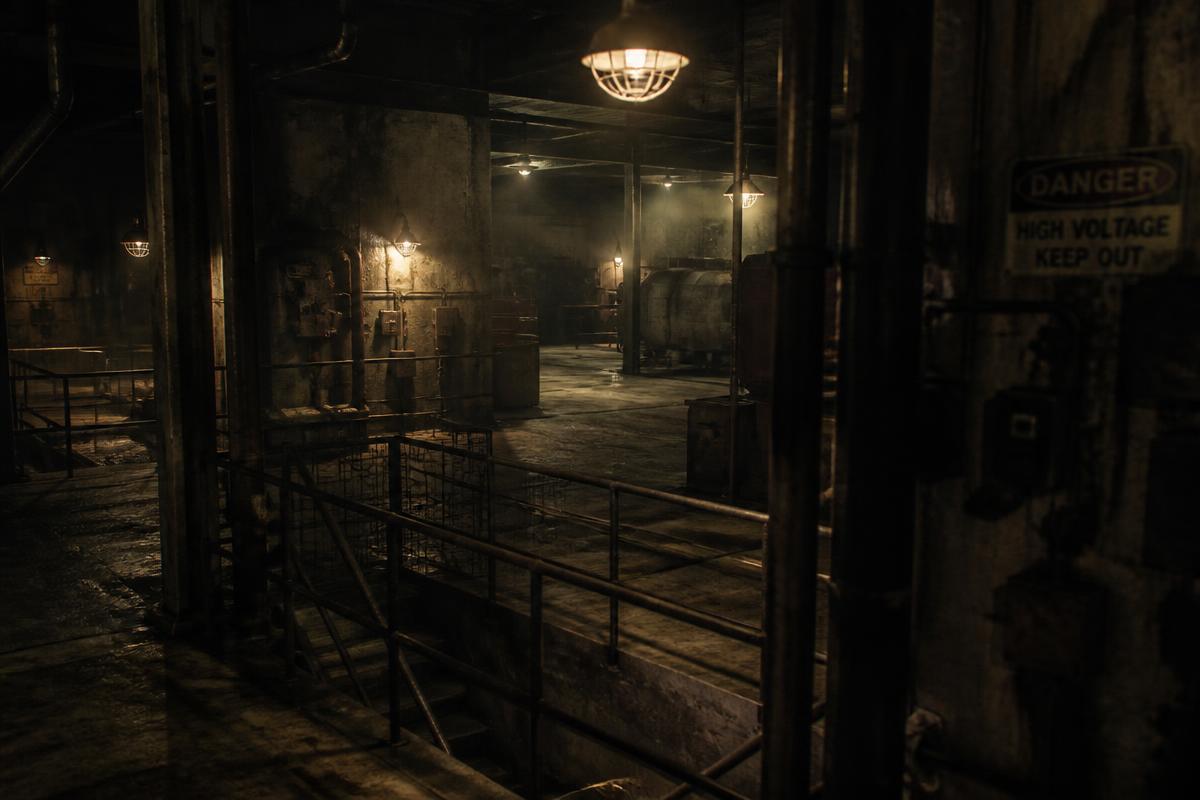
Most independent films don't overspend on sets. They misallocate. The money goes evenly across every environment instead of concentrating where the audience is looking, and the result is a film where nothing looks bad and nothing looks expensive.
Start with the hero environment
Identify the one or two spaces your film lives in — the room with the most screen time or the most important scene. Fund those properly. Everything else should be designed to borrow from them.
Budget by camera-facing surface
Break your set money down by what the lens sees, not by room. A wall the camera faces for eight minutes deserves texture, aging and detail. A wall behind the camera deserves paint and nothing more. This single reframing is where most of the savings live.
Design for reuse
Modular construction lets one build become several environments through reconfiguration, repaint and redress. If your script has three interior environments, ask whether they can share a skeleton before you price three builds.
Give dressing its own line
A common mistake is spending the entire set budget on construction and dressing the result with whatever's available. Reserve a real portion — dressing is what turns a built room into a lived-in place.
Count the shoot days honestly
Set cost isn't only build cost. Add the production days you'll need in the space, any overnight holds, and reset or cleaning. At Northside Studios that's $500 for a ten-hour day, $325 for a half day, $75 per night to hold a set standing, and a $100 minimum for cleaning and reset — see the published rate card.
Budget labor and time as one thing
Rushed builds cost more. If you can give a build three weeks instead of five days, you are effectively buying a discount. Lock your dates early and the same set gets cheaper.
Hold a contingency
Ten to fifteen percent. Something always changes: a scene gets added, a wall needs to move, a practical fails. A contingency is the difference between a change and a crisis.
A sample way to split it
For a small indie build, a workable starting split is roughly half to construction, a fifth to design and planning, a fifth to dressing and props, and the remainder as contingency — then adjust once the design tells you where the weight actually is.